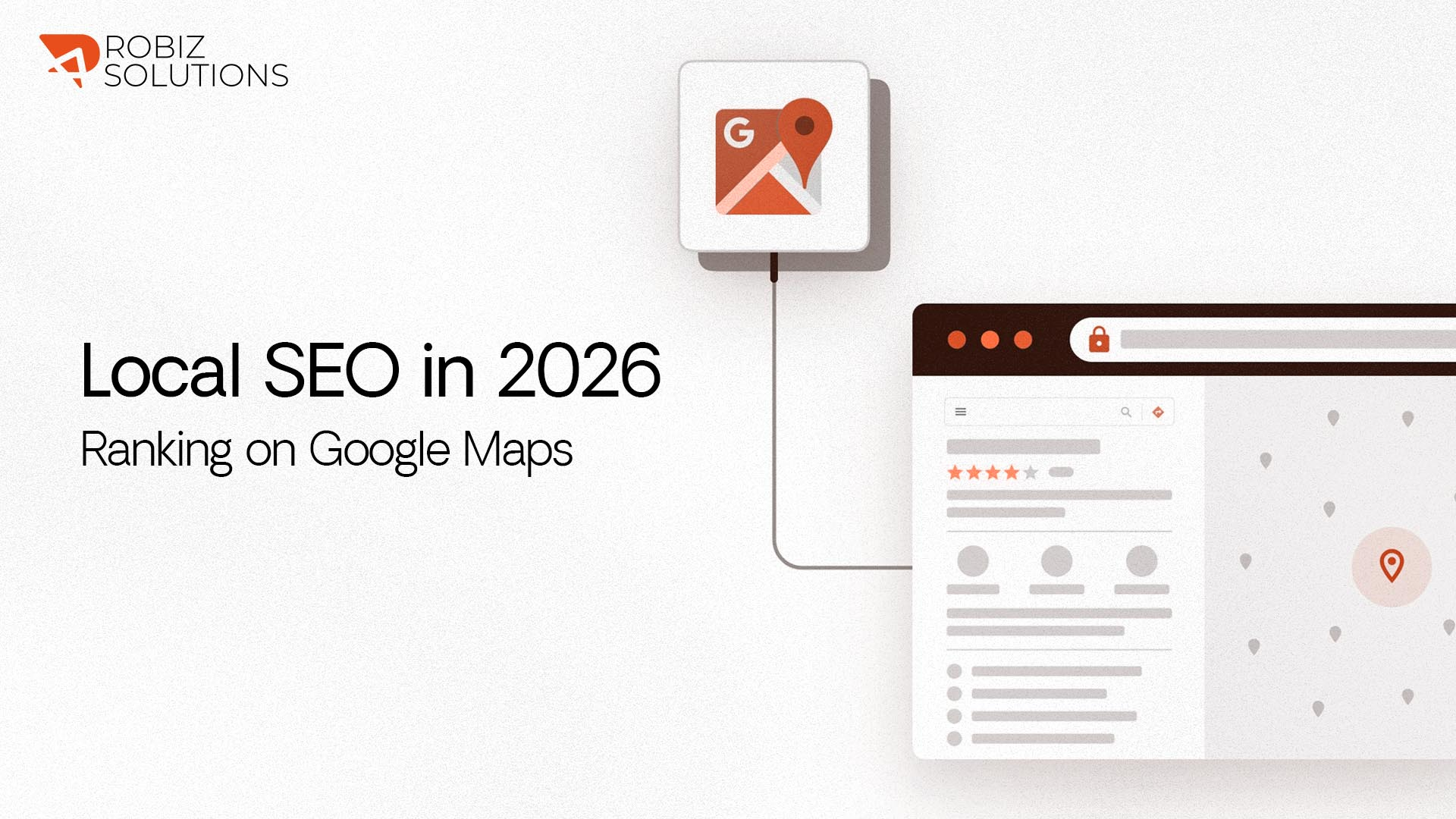
Local SEO is the process of optimizing your online presence so your business appears prominently in local search results and Google Maps when nearby customers search for your products or services.
In 2026, local search has never been more valuable, or more competitive. Google’s local pack (the map results that appear above organic listings) now appears on over 46% of all Google searches. For businesses serving specific geographic areas, local SEO is the highest-ROI organic channel available.
This guide covers the complete local SEO strategy for 2026, from Google Business Profile fundamentals to AI-powered local search optimization.
Why Local SEO Has Become Critical in 2026
Near Me Searches Continue to Grow
“Near me” search queries have grown consistently year over year and remain among the highest-intent searches on Google. A user searching “SEO agency near me” or “digital marketing services USA” is typically ready to evaluate and hire within days.
AI Overviews Now Include Local Results
Google’s AI Overviews increasingly pull local business information into generated answers for queries with local intent. Businesses with optimized Google Business Profiles and structured local citations have the highest probability of appearing in these AI-generated local recommendations.
Reviews Are Now a Ranking Signal AND a Trust Signal
Google’s local ranking algorithm uses review quantity, recency, and response rate as active ranking signals. A business with 200 reviews and a 4.8 rating will outrank a competitor with better backlinks but fewer reviews in the local pack.
The 6 Pillars of Local SEO in 2026
1. Google Business Profile (GBP) Optimization
Your Google Business Profile is the single most important local SEO asset. Optimization includes:
Completeness:
- Business name exactly as it appears legally and consistently
- Accurate primary and secondary business categories
- Full address, phone number, and website URL
- Detailed business description (750 characters) with primary keywords
- All relevant attributes (appointment required, accessible, etc.)
Content:
- Post weekly updates (promotions, events, news)
- Upload high-quality photos of your team, location, and work
- Add products or services with descriptions and pricing
- Answer all customer Q&A prompts
Reviews:
- Respond to every review (positive and negative)
- Actively request reviews from satisfied customers
- Never incentivize or buy reviews
2. NAP Consistency Across Citations
NAP stands for Name, Address, Phone Number. Your NAP must be identical across every online directory, social platform, and citation where your business appears. Inconsistencies confuse Google’s local algorithm and suppress rankings.
Key citation sources:
- Google Business Profile
- Facebook Business Page
- Yelp
- Apple Maps
- Industry-specific directories
- Local chamber of commerce listings
3. Local On-Page SEO
Your website needs local SEO signals alongside your GBP:
- Include your city/region in title tags and meta descriptions
- Create location-specific service pages if serving multiple areas
- Add your business address to your website footer
- Embed a Google Maps iframe on your contact page
- Implement LocalBusiness schema markup with JSON-LD
4. Local Content Strategy
Creating content about local topics builds geographic relevance signals:
- Blog posts addressing local industry trends
- Case studies featuring local client results
- Pages about specific neighborhoods or service areas you cover
- Content answering questions local customers ask
Example: An SEO agency in USA should have content about digital marketing challenges specific to USA businesses, local e-commerce growth trends, and results achieved for local clients, not just generic SEO guides.
5. Local Link Building
Local backlinks carry stronger local ranking signals than generic links:
- Sponsorship links from local events and organizations
- Guest posts on local business publications and blogs
- Links from local business associations and chambers of commerce
- Partnerships with complementary local businesses (cross-promotion)
6. Review Velocity and Management
Review acquisition strategy:
- Ask for reviews immediately after a positive client interaction
- Send follow-up emails with a direct link to your Google review form
- Train customer-facing staff on review request timing and language
- Respond to all reviews within 24 hours using natural language
Local SEO for AI-Powered Search in 2026
Optimize for Conversational Local Queries
Voice search and AI chat queries are phrased as natural language: “Who is the best digital marketing agency in Canada?” or “Find me an SEO company that specializes in e-commerce.” Your content and GBP description should naturally include conversational language that mirrors these queries.
Use LocalBusiness Schema
JSON-LD LocalBusiness schema tells AI crawlers exactly where you are, what you do, and who you serve. This structured data is directly consumed by Google’s AI systems when generating local answers.
json;
{
“@context”: “https://schema.org”,
“@type”: “LocalBusiness”,
“name”: “Robiz Solutions”,
“url”: “https://robizsolutions.com”,
“description”: “AI-enabled digital marketing agency…”
}
Build Consistent Brand Signals
AI search systems increasingly use brand mentions, social media presence, and consistent entity signals to verify local business legitimacy. Consistent brand mentions across LinkedIn, Facebook, Twitter, and industry publications strengthen your local AI search presence.
How Robiz Solutions Delivers Local SEO Results
At Robiz Solutions, our Performance Marketing services include comprehensive local SEO strategy for businesses competing in geographic markets. We build GBP optimization, citation management, local content strategy, and review acquisition systems that compound over time.
Our results across accounts like Grans and Khair Vitamins demonstrate the kind of systematic local authority building that drives sustainable visibility. Contact us to discuss a local SEO strategy for your business.
Questions About Local SEO
Google Business Profile optimizations can show local pack ranking improvements within 4–8 weeks. Sustained local pack dominance through citation building and review acquisition typically takes 3–6 months of consistent effort.
Google requires a physical address to verify your GBP listing. Service-area businesses (those who serve customers at the customer’s location) can hide their address and still rank in local searches within their service area.
There is no fixed minimum. In competitive markets, the top 3 local pack results often have 50–200+ reviews. In less competitive markets, 20–30 quality reviews may be sufficient. Recency and response rate matter as much as total count.
Yes, through service area pages on your website targeting each city, combined with consistent GBP service area settings and location-specific content. Building separate GBP listings for physical locations in each city is the strongest approach where applicable
Local pack rankings appear in the map results triggered by local intent queries. Organic rankings appear in standard blue-link results below the map pack. Both are valuable, local pack dominates clicks for near-me queries, while organic rankings capture broader non-local research traffic.
Social media doesn’t directly affect Google local rankings, but consistent social presence builds brand signals that AI search systems use to verify business legitimacy. Consistent Facebook and Instagram business profiles strengthen overall local entity authority.
Respond professionally to negative reviews; acknowledge the issue, offer to resolve it, and demonstrate that you take feedback seriously. Never respond defensively. A professionally handled negative review often increases trust more than a perfect rating with no engagement.
Published by Robiz Solutions – robizsolutions.com