
Direct Answer
Content marketing helps CEOs build authority, strengthen customer trust, generate qualified leads, improve search visibility, and support long-term business growth. In 2026, it is no longer only a marketing activity. It is a strategic business asset that influences brand perception, AI search visibility, revenue growth, and customer decision-making.
Why Content Marketing Has Become a Boardroom Priority
Content marketing is no longer just about publishing blogs, posting on social media, or sending newsletters. For CEOs, it has become a strategic growth system that connects brand authority, customer education, demand generation, search visibility, and revenue enablement.
In a market where buyers research independently before speaking to a sales team, content often becomes the first serious interaction between a potential customer and your business. A strong article, guide, case study, video, or thought leadership post can influence how prospects understand your company long before they submit a form or book a call.
That is why CEOs should not view content marketing as a task owned only by the marketing department. It should be treated as a business growth function.
A strong content strategy helps answer critical business questions:
- What does the company want to be known for?
- Which problems does the brand solve better than competitors?
- What information do customers need before they trust the business?
- Which topics support lead generation and sales conversations?
- How does content help the company appear in search engines and AI-generated answers?
- How does content influence customer acquisition, retention, and authority?
For companies competing in digital-first markets, content is not just communication. It is visibility, trust, education, positioning, and conversion infrastructure.
At Robiz Solutions, content marketing is treated as part of a larger digital growth system that connects performance marketing, SEO strategy, brand strategy, AI-powered growth, and conversion-focused web experiences.
What Is Content Marketing?
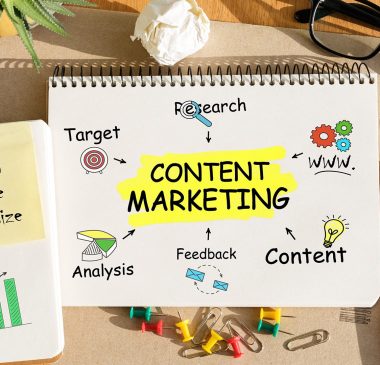
Content marketing is the strategic process of creating, publishing, distributing, and measuring valuable content to attract, educate, convert, and retain a clearly defined audience.
It can include:
- Blog articles
- Case studies
- Whitepapers
- Landing pages
- Email newsletters
- LinkedIn thought leadership
- Video content
- Social media content
- Webinars
- Guides
- Reports
- Product explainers
- Industry insights
- FAQs
- Sales enablement content
The Content Marketing Institute defines content marketing as a strategic marketing approach focused on creating and distributing valuable, relevant, and consistent content to attract and retain a clearly defined audience.
For CEOs, the key word is strategic.
Content should not be produced simply to “stay active” online. Every content asset should support a business goal, such as building trust, improving search visibility, generating leads, supporting sales, educating customers, or strengthening brand authority.
The CEO’s Role in Content Marketing
A CEO does not need to write every blog, approve every caption, or manage every content calendar. However, leadership involvement is essential.
The CEO sets the strategic direction.
Marketing teams can execute content, but they need leadership clarity on:
- Brand positioning
- Business priorities
- Target audiences
- Growth markets
- Sales objections
- Competitive differentiation
- Industry point of view
- Long-term authority goals
Without CEO-level direction, content often becomes generic. It may generate activity, but not authority.
A strong CEO-led content strategy ensures that every article, post, video, and campaign supports the company’s business model and market position.
Why CEOs Should Care About Content Marketing in 2026
Content marketing matters more in 2026 because buyers, search engines, and AI systems are all becoming more selective.
Customers do not want vague promises. They want useful answers, proof, clarity, and trust.
Search engines do not reward thin or generic content. Google’s guidance on creating helpful, reliable, people-first content emphasizes usefulness, originality, expertise, trust, and content created for people rather than content made only to manipulate rankings.
AI-powered search experiences, including Google AI features, are also changing how users discover and evaluate information. Content now needs to be structured, trustworthy, specific, and easy to summarize.
This means CEOs should think about content marketing across five business outcomes.
1. Brand Authority
Content helps a company become known for specific expertise.
If your business wants to be seen as a leader in digital transformation, healthcare marketing, ecommerce growth, HR technology, B2B consulting, or AI automation, your content must repeatedly support that position.
Authority is built through consistency.
A single blog is not enough.
A strong authority system includes:
- Strategic service pages
- Supporting blogs
- Case studies
- Founder insights
- Industry commentary
- Data-backed resources
- Thought leadership content
- FAQs and decision-stage content
- Internal links between related pages
For example, a business that wants to rank and be trusted for AI-powered search should build a topic cluster around AI SEO, GEO, Google AI Overviews, technical SEO, search-agent readiness, content quality, and reporting.
Robiz Solutions has already started building this kind of cluster with resources such as:
- What Is Generative Engine Optimization GEO?
- How to Rank in Google AI Overviews
- What Is Technical SEO and Why Your Website Needs It?
- How to Do Keyword Research in 2026
2. Demand Generation
Content helps create demand before buyers are ready to speak with sales.
Not every potential customer is actively searching for a vendor today. Some are still learning about the problem. Others are comparing options. Some are trying to understand pricing, process, ROI, or risk.
Content helps move these buyers forward.
A strong demand-generation content strategy includes:
- Problem-aware articles
- Comparison blogs
- Educational guides
- ROI explainers
- Industry-specific content
- Case studies
- Lead magnets
- Email nurture sequences
- Retargeting content
For example, a business owner may not search “hire a digital marketing agency” first. They may start with questions like:
- Why is my website not generating leads?
- How do I know if SEO is working?
- What digital marketing KPIs should I track?
- Is SEO worth it for small businesses?
- Should I hire an agency or build an internal team?
Robiz Solutions can support these buyer journeys with internal resources such as:
- Digital Marketing Metrics and KPIs to Track
- What Is a Digital Marketing Funnel?
- 5 Benefits of Hiring a Digital Marketing Agency
- Is SEO Worth It for Small Business?
3. Search Visibility
Content is one of the strongest drivers of organic visibility.
A website cannot rank for topics it does not meaningfully cover. Service pages are important, but blogs, guides, FAQs, and case studies help expand topical authority.
Strong content supports SEO by improving:
- Keyword coverage
- Topical depth
- Internal linking
- Search intent matching
- Entity clarity
- Crawlable information architecture
- Long-tail visibility
- Featured snippet opportunities
- AI citation opportunities
However, more content does not automatically mean better SEO.
A weak content strategy creates problems such as:
- Duplicate topics
- Thin blogs
- Cannibalization
- Low-quality AI-generated pages
- Generic keyword targeting
- Poor internal linking
- No clear conversion path
A strong CEO-level content strategy should prioritize quality, business alignment, and search intent.
Before approving any new content topic, leadership should ask:
- Does this support a service or business goal?
- Does it answer a real customer question?
- Does it avoid competing with an existing page?
- Does it strengthen internal linking?
- Can it generate leads or support sales?
- Can it improve AI visibility or authority?
4. AI Search and Citation Visibility
Content marketing is now also connected to AI Search Optimization.
AI-powered platforms increasingly retrieve, summarize, and cite information from websites. This means content must be built not only for users and search engines, but also for AI systems that need clear, structured, trustworthy information.
In practical terms, content should include:
- Direct answer blocks
- Clear definitions
- Logical headings
- Concise summaries
- FAQs
- Comparison sections
- Step-by-step explanations
- Evidence where needed
- Strong internal links
- Clear author or business identity
- Updated and specific information
This supports Answer Engine Optimization (AEO) and Generative Engine Optimization (GEO).
If a company wants to appear in AI-generated answers, its content must be easy to retrieve, cite, summarize, and trust.
For CEOs, this is not a technical trend to ignore. It affects future brand visibility.
Useful supporting resources:
- What Is Generative Engine Optimization GEO?
- How to Rank in Google AI Overviews
- What Are the Best AI Marketing Tools?
- AI Automation for Business
5. Revenue Enablement
Content should not only attract visitors. It should help convert them.
A CEO should expect content to support the sales process by answering objections before a prospect speaks with the team.
Revenue-focused content can help answer:
- What does the company offer?
- Who is the service for?
- How does the process work?
- What results can clients expect?
- What makes the company different?
- What problems does the service solve?
- How does pricing or investment work?
- What proof exists?
- What should the buyer do next?
This is why content marketing should connect closely with sales, customer service, and leadership.
- If sales teams repeatedly answer the same questions, those questions should become content.
- If customers hesitate because they do not understand the value, that objection should become content.
- If prospects compare your business with alternatives, that comparison should become content.
The CEO’s Content Marketing Framework
A CEO-level content strategy should be simple enough to manage but strong enough to guide execution.
Use this six-part framework.
1. Positioning
Start with what the company wants to be known for.
Content should reinforce clear market positioning.
Ask:
- What category do we want to own?
- What problems do we solve best?
- What audience are we targeting?
- What industries matter most?
- What makes us different?
- What topics should we be associated with?
For Robiz Solutions, content can support positioning around digital growth, creative excellence, AI-enabled marketing, technical SEO, website design, automation, and performance marketing.
Relevant service pages include:
- Performance Marketing Services
- AI Agency Services
- Tech & Digital Engineering
- Creative Excellence
- Website Design
2. Audience
A CEO must know who the content is for.
Content written for everyone usually resonates with no one.
Define:
- Primary decision-makers
- Secondary influencers
- Industry segments
- Pain points
- Buying triggers
- Objections
- Preferred content formats
- Decision timelines
For executive audiences, content should be clear, concise, strategic, and business-focused. CEOs and founders do not want fluff. They want insight, decision support, and practical direction.
3. Content Pillars
Content pillars keep the strategy focused.
A company may choose pillars such as:
- SEO and AI Search
- Digital marketing strategy
- Branding and creative excellence
- Website design and conversion
- Automation and AI
- Ecommerce growth
- Performance marketing
- Industry-specific marketing
Each pillar should connect to services, case studies, and conversion goals.
Without pillars, content becomes scattered.
4. Content Formats
Different formats support different buyer stages.
Awareness-stage formats:
- Educational blogs
- Explainer videos
- Social media posts
- Thought leadership content
Consideration-stage formats:
- Comparison blogs
- Case studies
- Service guides
- Webinars
- Checklists
Decision-stage formats:
- Landing pages
- Proposal guides
- Testimonials
- Pricing explainers
- Consultation CTAs
Retention-stage formats:
- Email newsletters
- Customer education
- Product updates
- Best-practice guides
A CEO should not approve content only by format. The real question is: “What business role does this content play?”
5. Distribution
Content creation is only half the system.
Content must be distributed.
Strong distribution channels include:
- Organic search
- Email newsletters
- YouTube
- Paid social
- Retargeting campaigns
- Sales outreach
- Internal sales enablement
- Partner channels
A valuable article can become:
- A LinkedIn carousel
- A short video
- A newsletter
- A sales email
- A webinar topic
- A paid ad angle
- A podcast discussion
- A series of social posts
This improves ROI because one strategic content asset can support multiple channels.
6. Measurement
CEOs should measure content by business impact, not activity alone.
Publishing 20 blogs means little if none of them support visibility, trust, or revenue.
Important content marketing KPIs include:
SEO Metrics
- Organic traffic
- Keyword rankings
- Search impressions
- Click-through rate
- Indexed pages
- Top-performing pages
Engagement Metrics
- Average engagement time
- Scroll depth
- Social shares
- Email clicks
- Returning visitors
Lead Metrics
- Form submissions
- Phone clicks
- Consultation requests
- Demo bookings
- Quote requests
Revenue Metrics
- Content-assisted conversions
- Lead quality
- Sales pipeline contribution
- Customer acquisition cost
- Conversion rate
AI Visibility Metrics
- AI Overview presence
- ChatGPT Search mentions
- Perplexity citations
- Claude mentions
- Gemini visibility
- Bing Copilot citations
- Cited URLs
- Brand mentions
- Competitor citations
- Citation retention
- Query coverage
Robiz Solutions has a useful supporting article on digital marketing metrics and KPIs that can help businesses connect reporting with growth decisions.
How CEOs Can Build a Content Marketing Culture
Content marketing works best when it is not isolated inside one department.
A strong content culture gathers insights from across the company.
Sales teams know customer objections.
Customer support teams know recurring problems.
Leadership knows business priorities.
Operations teams know delivery realities.
Marketing teams know how to package and distribute the message.
When these perspectives work together, content becomes more useful, specific, and credible.
CEOs can support a content culture by:
- Making content part of strategic planning
- Encouraging departments to share customer insights
- Reviewing key thought leadership themes
- Supporting case study development
- Investing in content quality
- Connecting content with sales and revenue goals
- Avoiding random content requests without strategy
Budgeting for Content Marketing
Content marketing requires investment.
A CEO should budget for:
- Strategy development
- Keyword research
- Content writing
- Design
- Video production
- SEO optimization
- Content management systems
- Analytics tools
- Paid distribution
- Email marketing tools
- Content updates
- Reporting
The return on content marketing often compounds over time. Unlike short-term ads, strong content can continue attracting, educating, and converting prospects long after it is published.
However, content only compounds when it is built strategically.
Low-quality content becomes clutter. High-quality content becomes an asset.
Technology and Tools for Content Marketing
The right tools can help teams work faster and measure better.
Common content marketing tools include:
- CMS platforms
- SEO tools
- Keyword research platforms
- Analytics software
- CRM systems
- Email marketing tools
- Project management tools
- Design tools
- AI writing assistants
- Automation platforms
AI tools can support content research, outlines, editing, repurposing, and analysis. However, AI should not replace expert review, brand judgment, original insight, or strategic thinking.
Google’s people-first content guidance warns against content made primarily to manipulate rankings. That means businesses should use AI as an assistant, not as a shortcut for mass-producing generic pages.
Legal and Ethical Considerations
Content marketing also carries responsibility.
Companies should ensure that content is:
- Accurate
- Original
- Properly sourced
- Compliant with copyright rules
- Transparent
- Free from misleading claims
- Aligned with industry regulations
- Respectful of privacy and consent
This is especially important in industries such as healthcare, legal, finance, wellness, education, and professional services.
A CEO should make sure marketing teams understand where claims require evidence, approvals, or legal review.
Common Content Marketing Mistakes CEOs Should Avoid
Avoid these mistakes:
- Publishing content without a strategy
- Measuring only traffic
- Ignoring lead quality
- Creating generic AI-written blogs
- Copying competitor topics without differentiation
- Publishing blogs that compete with service pages
- Ignoring internal links
- Not updating old content
- Overlooking conversion CTAs
- Treating thought leadership as personal branding only
- Ignoring AI search and citation visibility
- Failing to connect content with sales objections
Strong content marketing is not about volume alone. It is about strategic relevance, authority, quality, and measurable business value.
Frequently Asked Questions
CEOs should care about content marketing because it directly influences brand authority, lead generation, customer trust, search visibility, sales enablement, and long-term growth. A strong content strategy helps the company educate buyers, answer objections, build credibility, and create demand before prospects contact sales.
Content marketing supports business growth by attracting relevant audiences, improving organic visibility, building trust, nurturing prospects, and helping sales teams convert better-informed leads. It also creates long-term digital assets that continue generating value beyond short-term campaigns.
Executive audiences usually prefer concise, practical, and insight-driven formats such as industry reports, executive guides, LinkedIn thought leadership, case studies, podcasts, webinars, newsletters, and strategic blog articles. The best format depends on the buyer stage and business objective.
AI Search increases the importance of clear, structured, trustworthy, and specific content. AI-powered search systems may summarize and cite content directly in answers, so businesses need content that is easy to retrieve, understand, cite, and verify.
CEOs should measure content marketing ROI through organic visibility, qualified leads, conversion rates, sales pipeline contribution, customer acquisition cost, content-assisted revenue, engagement quality, and AI visibility metrics such as citations, brand mentions, and query coverage.
Thought leadership is a type of content marketing focused on original ideas, executive perspective, industry insight, and authority building. Content marketing is broader and includes educational, promotional, SEO, sales enablement, and customer retention content.
Yes. Content marketing can generate leads for B2B companies when it is built around buyer intent, service relevance, trust-building, and clear conversion paths. Strong B2B content answers decision-stage questions and helps prospects understand why a company is the right fit.
A business should publish consistently, but quality matters more than frequency. A strong schedule may include two to four strategic articles per month, supported by social content, email distribution, and updates to existing pages. The right frequency depends on competition, resources, and business goals.
Yes, content marketing can support Google AI Overview visibility when pages are crawlable, helpful, structured, specific, trustworthy, and aligned with user intent. However, AI Overview visibility is not guaranteed and should be treated as an ongoing citation opportunity.
Content marketing improves brand authority by consistently publishing useful insights, answering customer questions, demonstrating expertise, showcasing proof, and building topical depth around priority services and industries. Over time, this helps both users and search systems understand what the brand should be trusted for.
Final Thoughts
Content marketing is no longer a support activity.
For CEOs, it is a strategic growth lever.
The companies that win in 2026 will not simply publish more content. They will create clearer, more useful, more trustworthy, and more strategic content that supports business goals, search visibility, AI citation opportunities, and revenue growth.
A strong content marketing strategy helps your company become easier to find, easier to trust, easier to understand, and easier to choose.
Ready to Build a Content Strategy That Supports Growth?
Robiz Solutions helps businesses turn content into a strategic growth system.
From performance marketing and AI-powered growth strategies to website design, creative excellence, SEO, automation, and conversion-focused digital strategy, our team helps brands build content systems designed for visibility, authority, and measurable business growth.
If your current content is not generating visibility, trust, or leads, it may be time to rethink the strategy.
Contact Robiz Solutions to discuss how a stronger content marketing strategy can support your next stage of growth.